
Winter is beautiful… until you realize what it does to your deck.
Cold temperatures, snow, ice, and moisture can seriously damage decking materials. Even the toughest wood, composite, or PVC boards benefit from a little extra care before winter arrives.
The good news? Protecting your deck doesn’t have to be complicated. A few simple habits can significantly improve how well your deck endures the season.
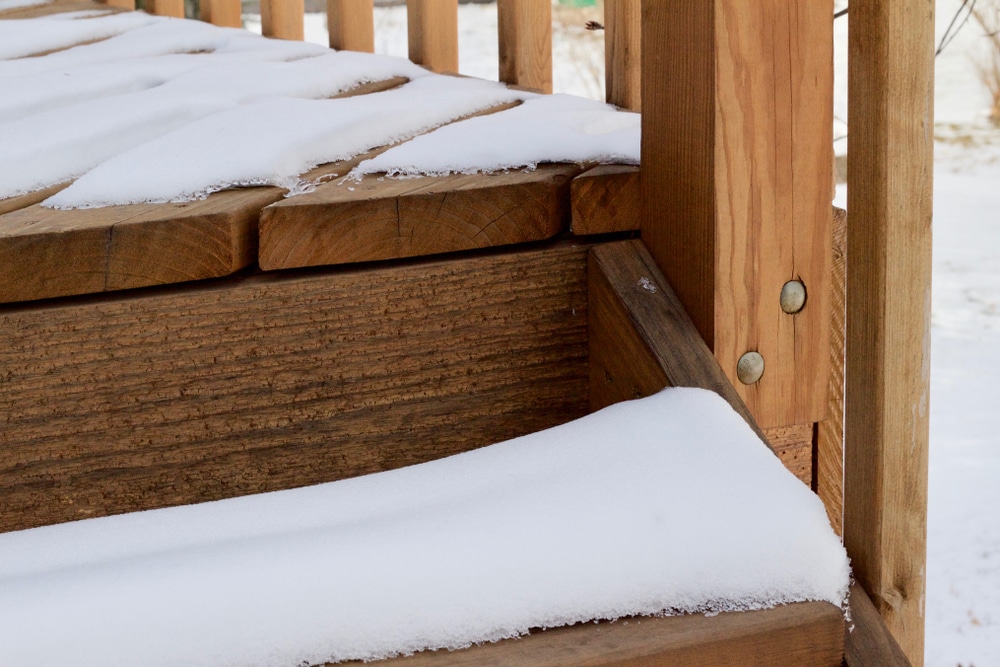
Let’s go over simple tips to keep your deck in top condition all winter.
Give Your Deck a Quick but Thorough Clean
One of the best things you can do before winter arrives is clean your deck.
Leaves, dirt, and debris trap moisture, which is the main threat to decking materials during colder months. When debris remains on the surface, it raises the risk of mildew, staining, and even structural damage over time.
A quick sweep is a good start, but a deeper clean is even better. Use a mild cleaner and a soft-bristle brush to remove stuck-on grime. If you have a composite or PVC deck, stick to products approved by the manufacturer. For wood decking, a wood-safe cleaner will help prepare the surface for sealing.
Seal or Stain Wood Decks Before Freezing Temps
Wood decking requires a bit more care than composite or PVC decking. If your wood deck needs a new coat of stain or sealer, finish it before winter fully arrives.
A high-quality deck sealant helps prevent moisture from soaking into the boards, which is essential because water expands when it freezes. That freeze-and-thaw cycle can lead to cracking, warping, and other costly issues.
If Outdoor Specialties installed your decking, we can recommend the appropriate finish based on the species and age of your wood. A properly sealed deck is much better prepared to endure the winter months ahead.
Keep Snow from Building Up
Maryland winters can be unpredictable. Some years bring heavy snow, while others feature a continuous mix of snow, sleet, and ice. Either way, promptly clearing snow can help prevent damage.
A few things to remember:
- Use a plastic shovel instead of metal to prevent scratching your deck.
- Shovel along the grain of the boards, not across them.
- Avoid using rock salt or harsh ice-melt products unless the manufacturer says they’re safe for your decking type.
Even composite and PVC decks can get surface scratches, so gentle snow removal is always best.
Move Furniture and Planters Off the Deck
If possible, store patio furniture, planters, grills, and decorations in a dry place during the winter. These items can trap moisture underneath, which may discolor surfaces and promote mildew growth.
If storage isn’t an option, occasionally rearrange heavier items. This helps the deck dry more evenly and prevents potential staining.
Inspect for Minor Issues Before They Become Major Problems
Winter weather often turns minor issues into larger repairs. Before temperatures fall too low, spend a few minutes visually inspecting your deck.
Look for:
- Loose boards
- Raised nails or screws
- Railings that wobble
- Areas that stay damp longer than others
Catching and fixing issues now, especially with help from a professional, can prevent bigger problems once snow and ice arrive.
Consider Adding a Deck Cover or Roof
If you want long-term protection and extra comfort, adding a roof or cover to your deck is a great investment. A covered deck protects your materials from harsh winter weather and extends your outdoor living season.
Outdoor Specialties creates custom deck covers that match your home’s style and protect your outdoor spaces year-round.
Get Winter-Ready With the Decking Pros
A little winter prep goes a long way in preserving your deck’s beauty and durability. Whether you need advice, materials, or help planning improvements, Outdoor Specialties is your local resource. Contact us to speak with a decking expert today.